
Published in Waldorf Today, July 2023
By Dan Savery Raz
Names have significance in Thailand and – like many other things – can transform over time. Thailand, historically called Siam until 1939, literally means ‘land of the free’. And Tripat School, formerly Tridhaksa, comprises ‘Tri’ (three) and ‘pat’ (development).
Tripat’s name may represent the threefold human activities of thinking–feeling–willing (TFW) but staff say it could also mean many more wonderful three’s, including body–soul–spirit; hand–heart–head; and even child–teacher–parent.
Being a predominantly Buddhist country, the number three also reminds us of the Buddha (teacher), Dharma (scripture), and Sangha (community), or the three bodies ‘trikaya’ of the Buddha.
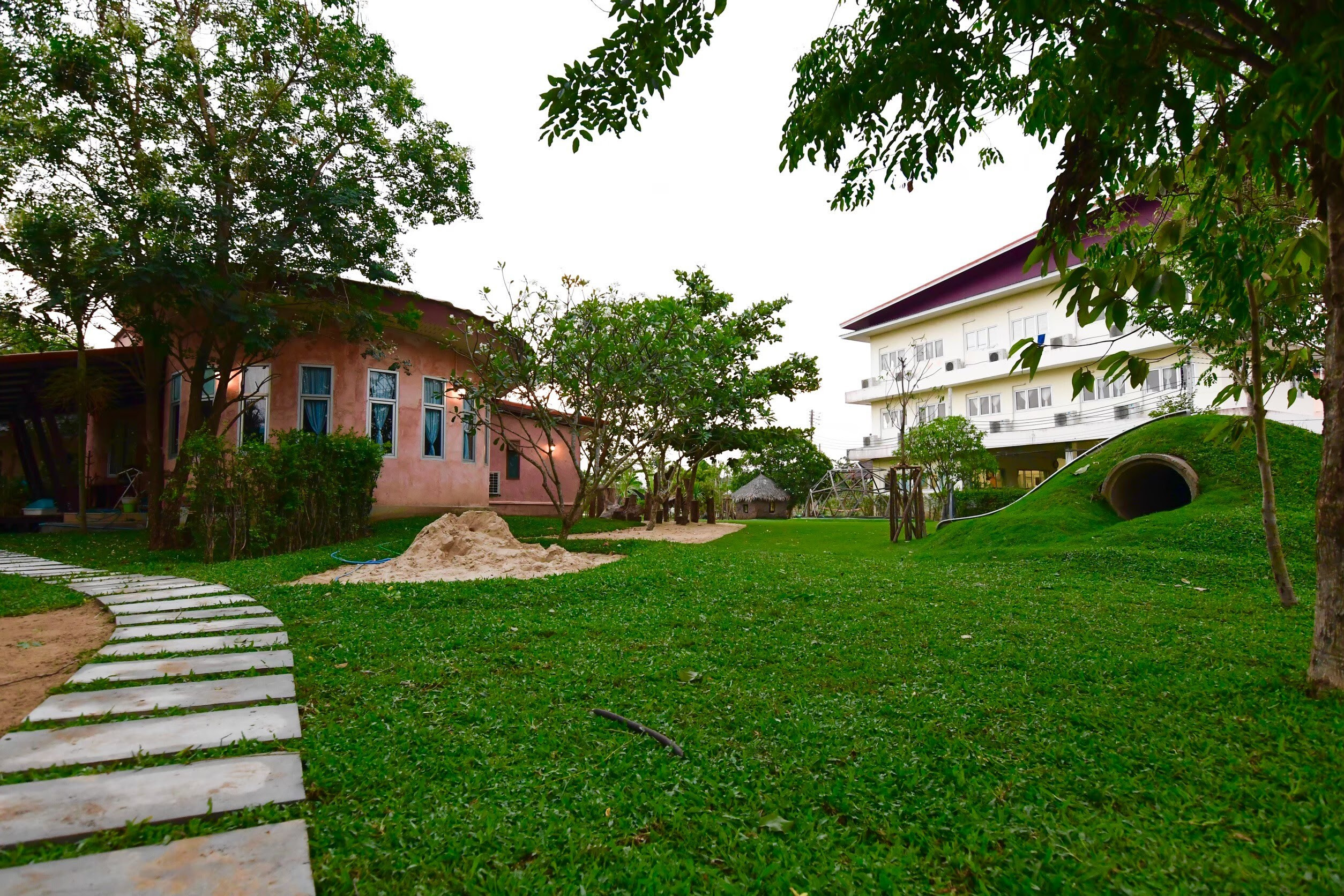
Tridhaksa began with a single class in 2001 but moved location in 2012 to the province of Pathum Thani, just north of the Thai capital of Bangkok and south of the ancient capital of Ayutthaya. Today, Tripat has more than 300 students from kindergarten to grade 12, with 30 staff members – some full-time, some part-time.
In Thailand, the school year starts in May and ends in March. Like other Waldorf schools worldwide, festivals such as the New Year are celebrated, as are unique Thai festivals such as the Rice Harvest and Loy Kratong. Celebrated each November on the full moon, Loy Kratong is both a festival of light and a thanksgiving for the rivers. During this time, the children make small ‘floating baskets’ resembling lotus flowers made from banana leaves.
The daily rhythm is familiar – the school bell rings at 7:50am, the children help clean up, start their main lesson and morning circle, take part in rope skipping and other activities, and then learn in specialist lessons.
Merf, a staff member for 17 years who teaches art and music history, says the children learn about western music and traditional Thai music and dance, as well as the Middle Path of Buddhism, including reverence and how to pray.
Anne, a staff member for 10 years who teaches English, chemistry, physics, and economics (to grade 12), says graduates of Tripat regard it as their ‘safe place’.
This summer, pro-democracy protests have swept over Thailand, involving large numbers of the youth, many feeling their voice is not being heard. Anne explains that in the upper school, the students learn about the last 100 years of Thai history and the many political and socioeconomic changes that occurred, to give them a sense of perspective.
One of the challenges of the school, they say, is not to let the political turmoil outside affect the inner life of the school. While they teach the older students how to understand the situation holistically, they also ask the parents of younger children not to discuss their political worries in front of their children.
Another challenge is that since Covid, more and more Thais have turned to homeschooling, and due to financial issues, Tripat had to close one of its three kindergartens.
However, Tripat is an established school, and recently opened two new buildings for the upper school. Both children from privileged and less privileged families are able to attend and this remains an important part of Tripat’s essence.
Tripat is seeking experienced Waldorf teachers for the upper school and English teachers for all ages. For details, contact tripatwaldorf@hotmail.com, or go to www.facebook.com/tripatwaldorf
 Danscribe